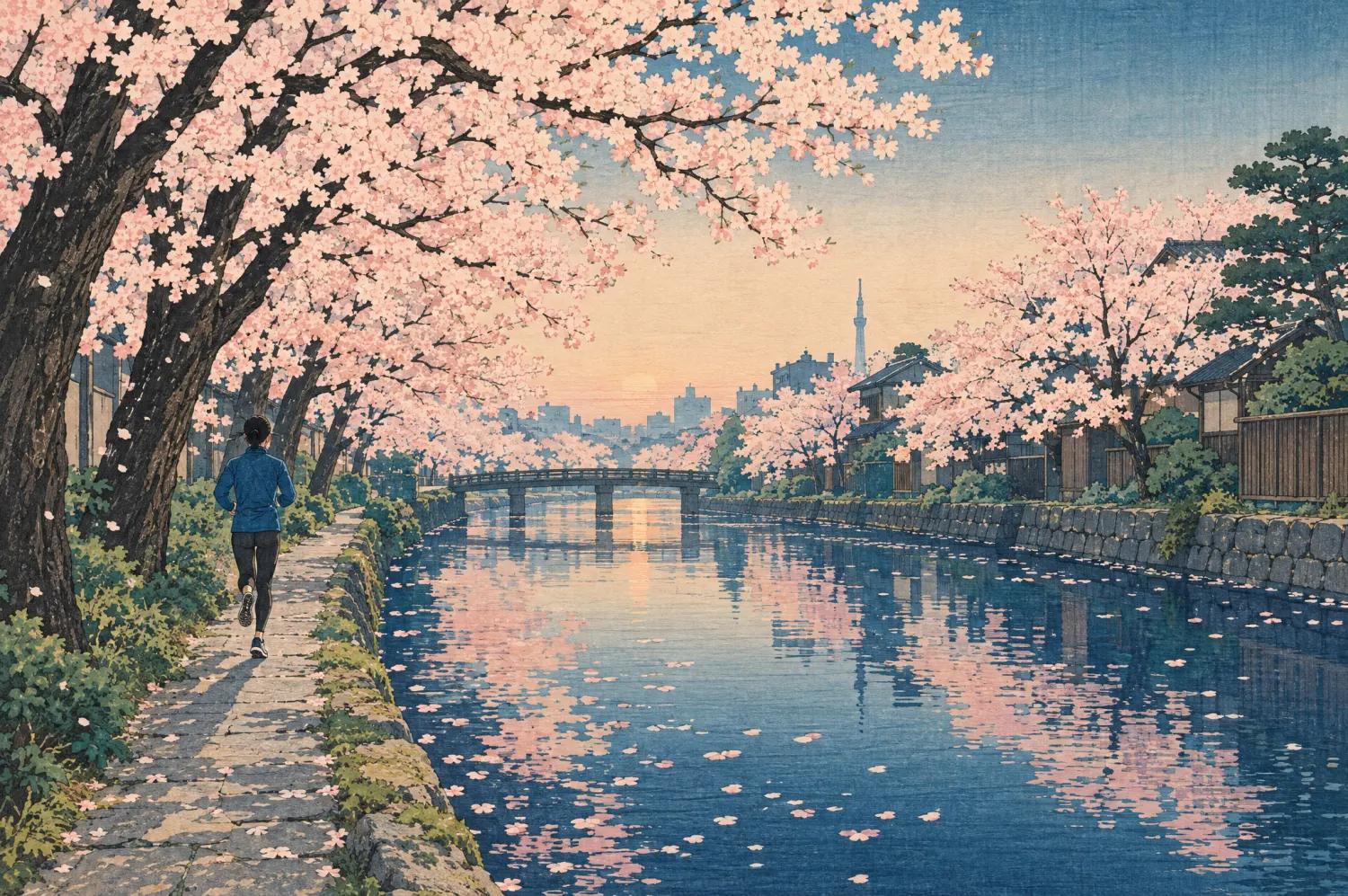
Spring
March to May
Cherry blossom along the canals and the race season’s last weeks. Cedar pollen runs from about mid-February to April and cypress from March to May: sunglasses help if you react. Shinjuku Gyoen bans running in its cherry weeks.
Tokyo gives you two running seasons and asks you to survive the third. From November to March the air is dry and the sky is blue. From June to September the heat and humidity decide what you can do.
March to May
Cherry blossom along the canals and the race season’s last weeks. Cedar pollen runs from about mid-February to April and cypress from March to May: sunglasses help if you react. Shinjuku Gyoen bans running in its cherry weeks.
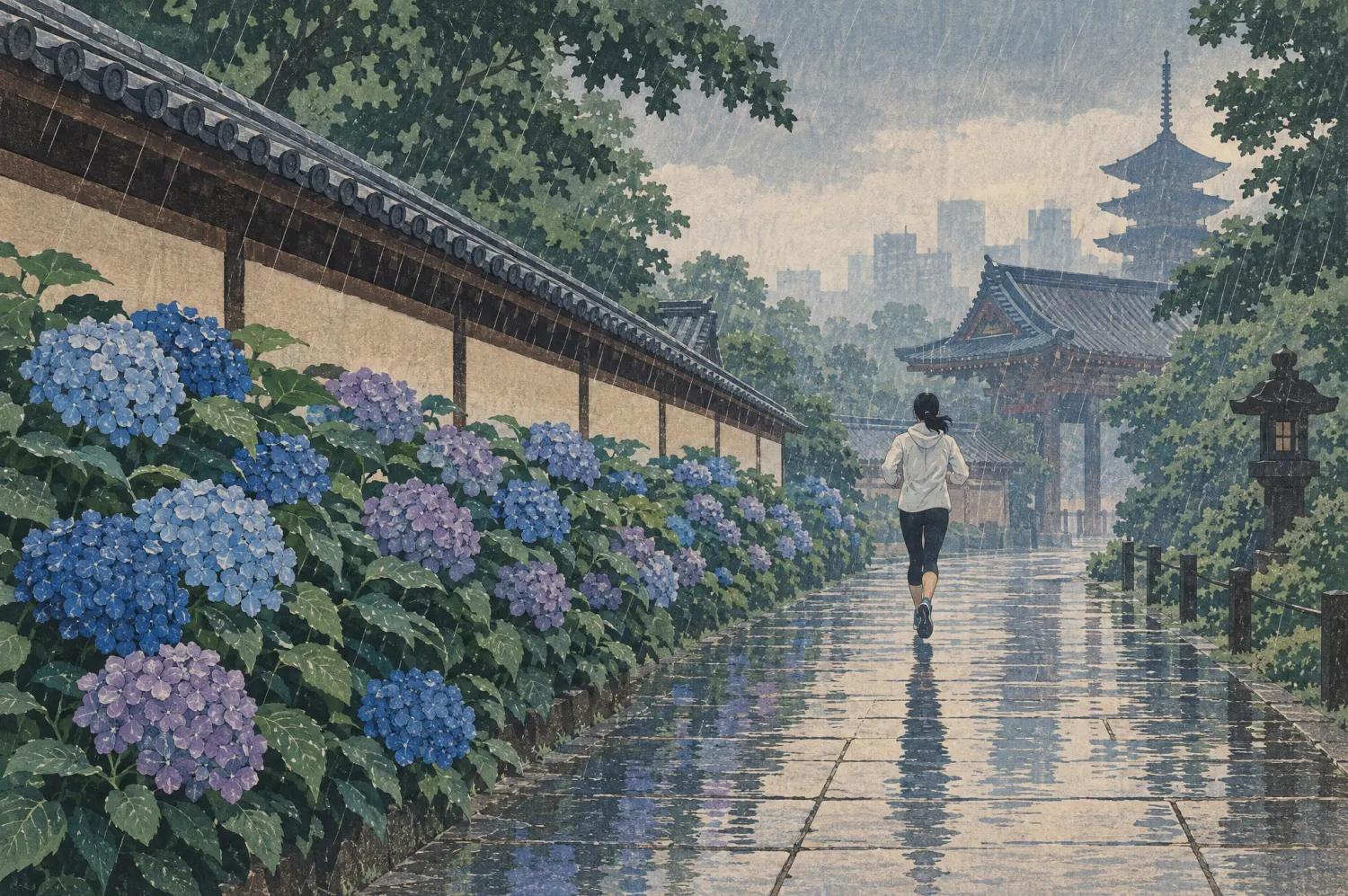
About 7 June to 19 July
Kanto’s rainy season normally runs from about 7 June to 19 July, though the dates move every year. Warm rain, high humidity, slick stone and paint. A brimmed cap and a light shell beat an umbrella.
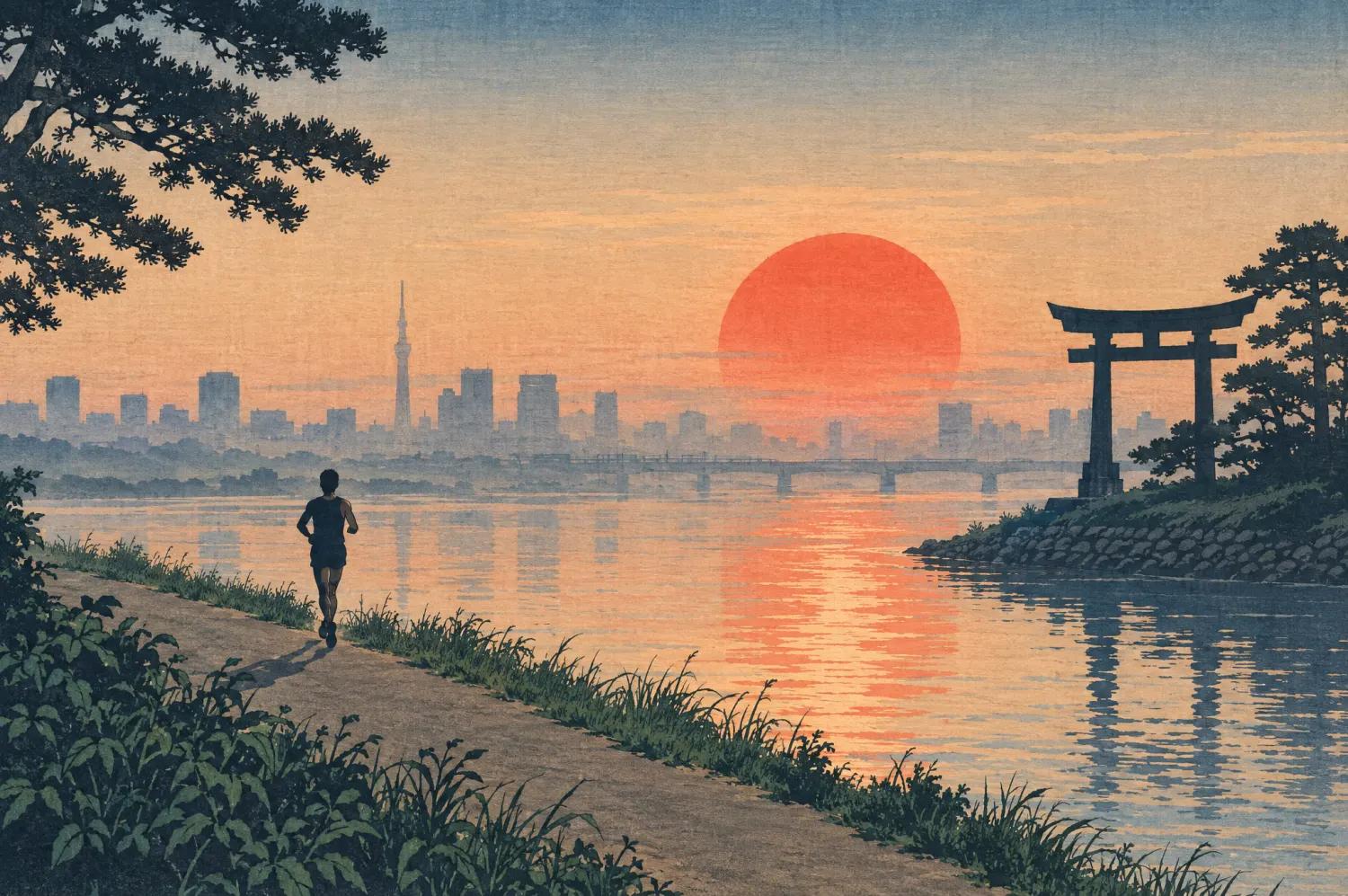
July to September
August averages a 31°C high with 74% humidity. The sun is up by about 4:30 in June, and so are Tokyo’s runners. Go at first light, slow down without guilt, and drink salt as well as water.
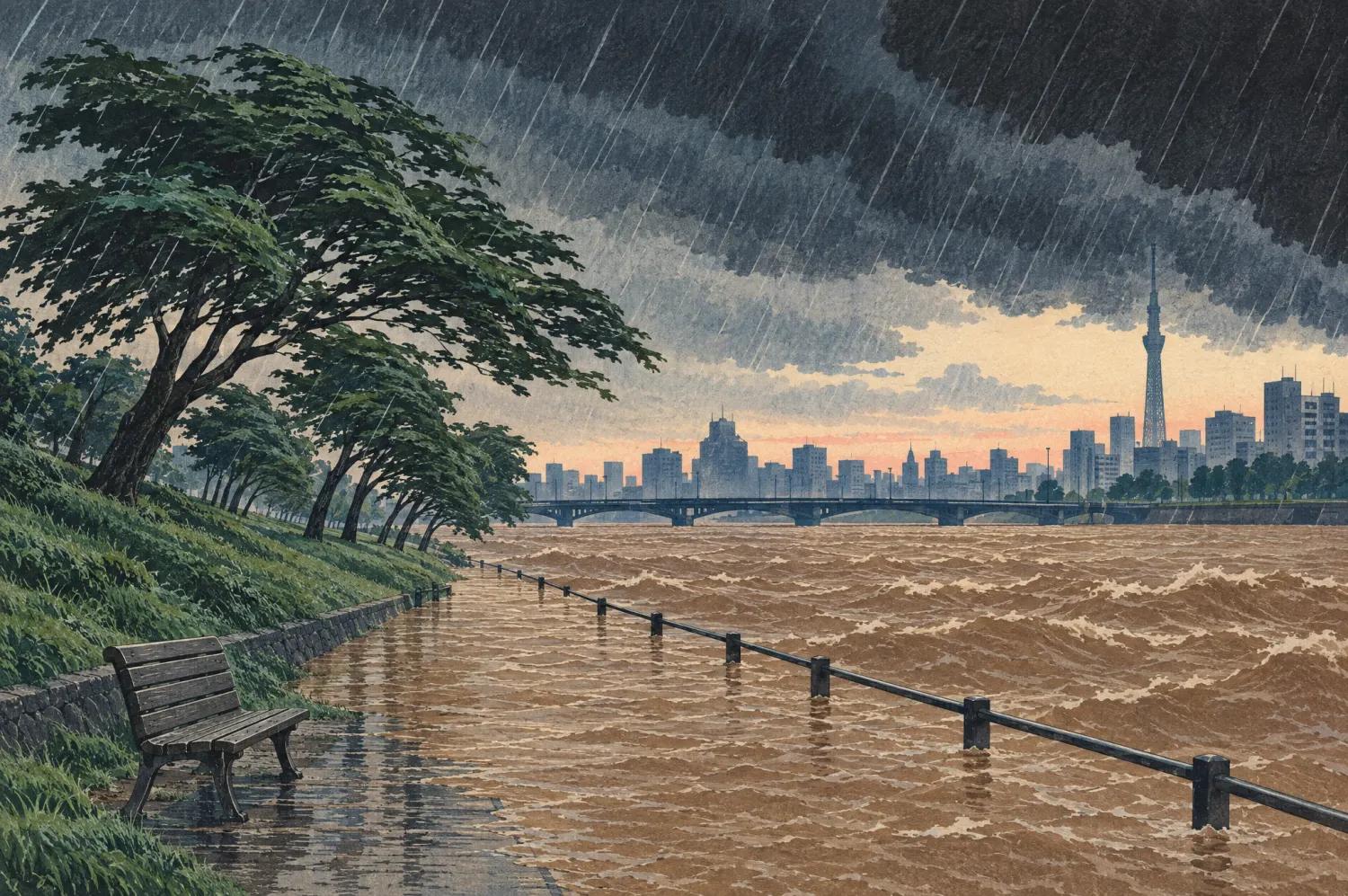
July to October, peak in September
About three typhoons a year pass within 300 km of Kanto, most often in September. Riverside paths flood and trains stop. When one is forecast, stay off the river paths and check the Japan Meteorological Agency.
October to November
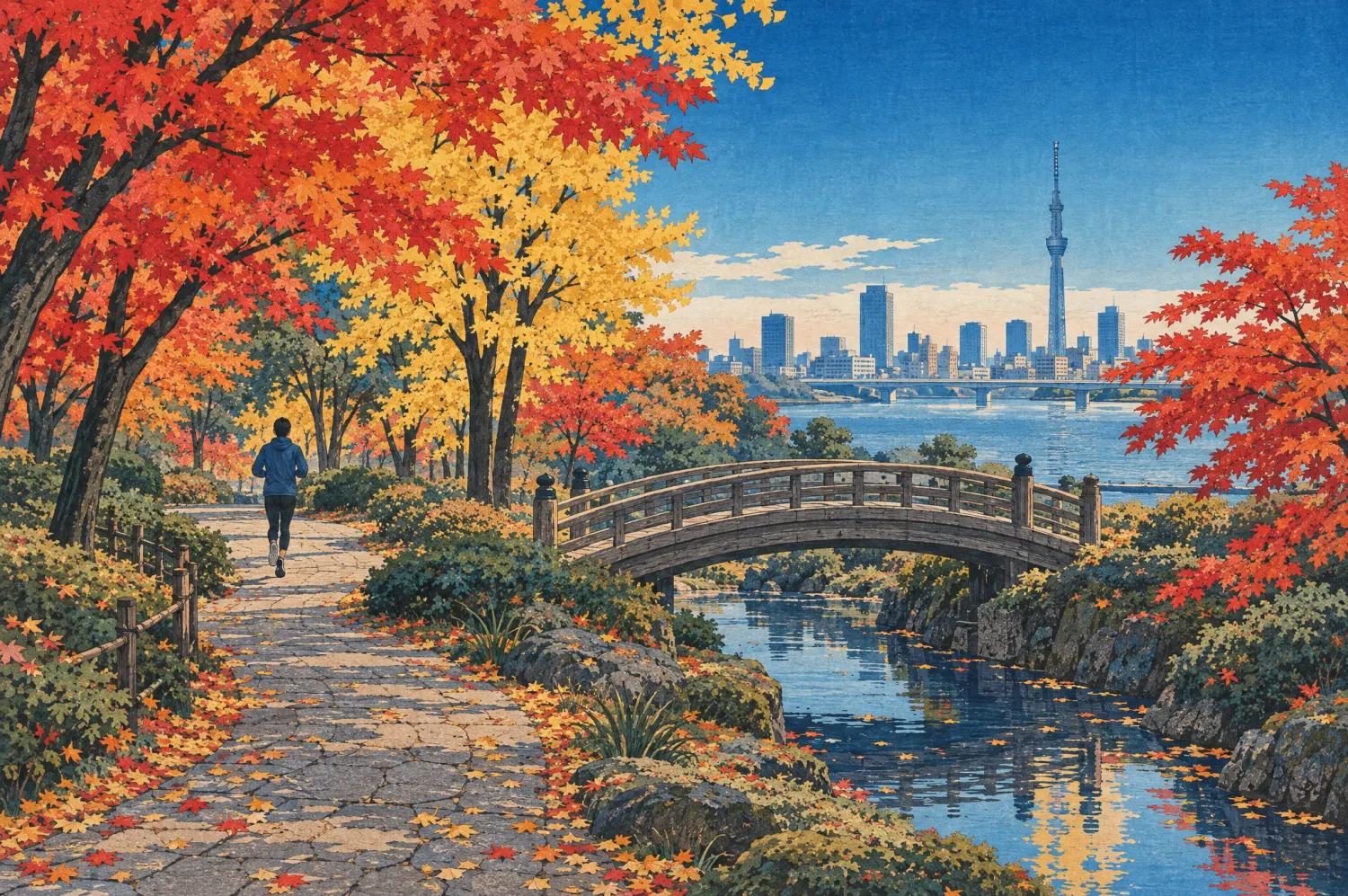
October is still wet, then the air dries, the ginkgo trees turn gold and the maples red, and the heat alerts end. Long runs come back, and so does the race calendar.
December to February
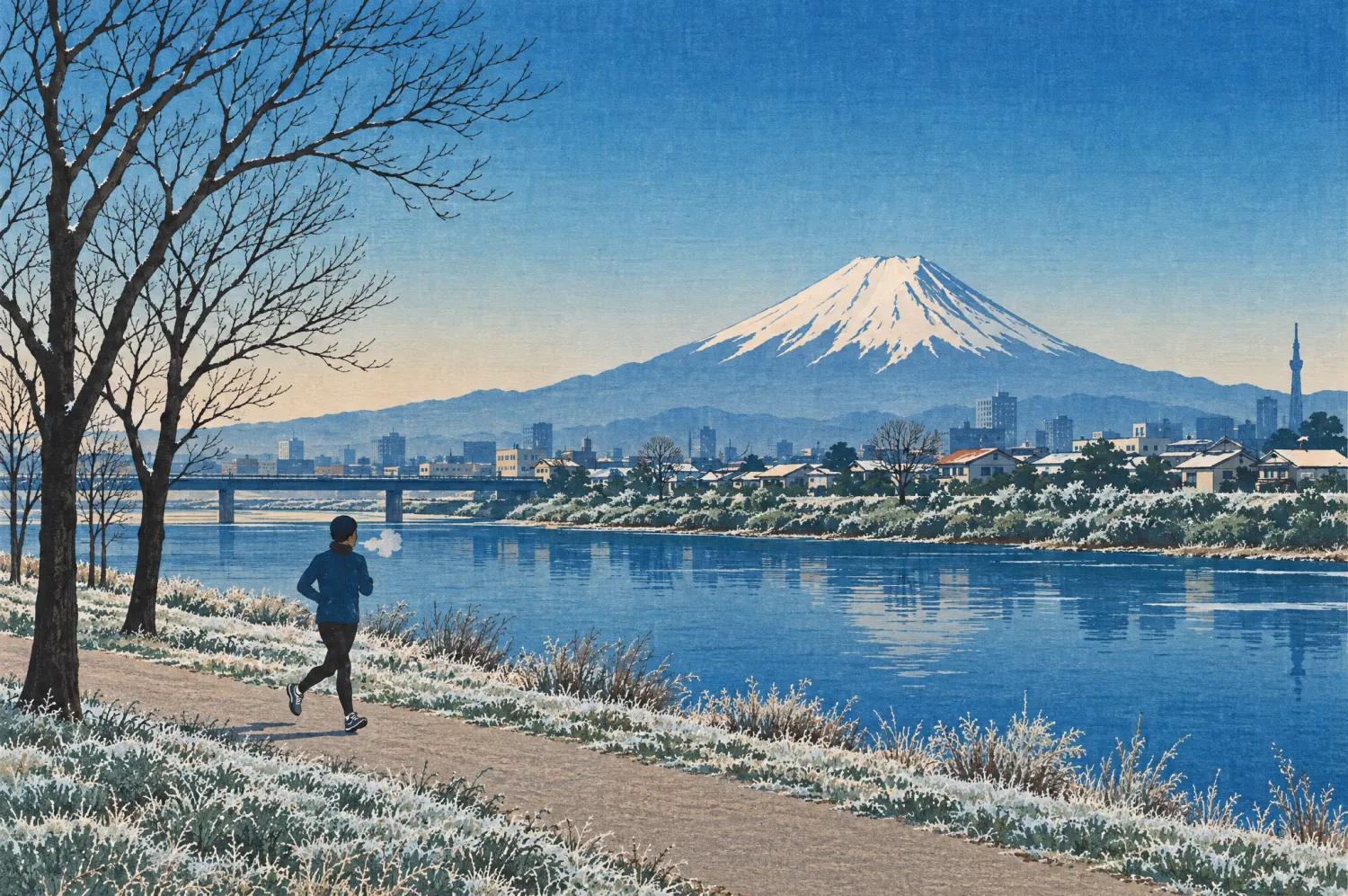
Tokyo’s secret: dry, sunny, rarely below freezing, with Mount Fuji on the horizon. January averages a 10°C high and most of Japan’s marathons happen now. Sunrise is near 7:00, so early runs start in the dark.
Japan measures heat for exercise with the WBGT index, which counts humidity and sun as well as temperature. The Ministry of the Environment issues a Heatstroke Alert when the day’s maximum is forecast at 33 or higher: the evening before at about 17:00, and again at about 5:00. A Special Heatstroke Alert (35 or higher at every point in Tokyo) comes at about 14:00 the day before. In 2026 the alert season runs from 22 April to 21 October.
Exercise should stop except in special cases. Move the run indoors or to tomorrow morning.
Avoid hard sessions and long runs. Rest every 10 to 20 minutes and replace water and salt.
Take regular breaks and replace water and salt; in hard sessions, rest about every 30 minutes.
Heatstroke deaths can still happen here. Watch for warning signs and drink water and salt between efforts.
Japan Sport Association guideline for exercise. Below 21 is almost safe, though heatstroke still happens at city marathons.
Today’s heat indexFind the shade. On a hot, sunny day, where you run matters as much as when. In midsummer, tree shade blocks the sun overhead and the heat rising from the pavement, and can bring the heat index down by about 2. So choose the parks over the river paths: Yoyogi’s shaded paths, or the Komazawa course under its cherry and zelkova trees, rather than the open embankments of the Tama and the Arakawa. Or wait for dark and run on a track: Oda Field is open to everyone on Tuesday, Wednesday, Friday and Saturday evenings until 21:00 (closed until the end of November 2026).
Tell it how much you run, how many days you have and which race you are aiming at. Every day it gives you one thing to do, and it adapts when life gets in the way: a lighter week when you are tired, short runs when you travel, walk-run when something hurts. It stays on this device. No account.
This site costs me time and money to keep current and hosted. I update it every day with new addresses and races. A coffee goes a long way.